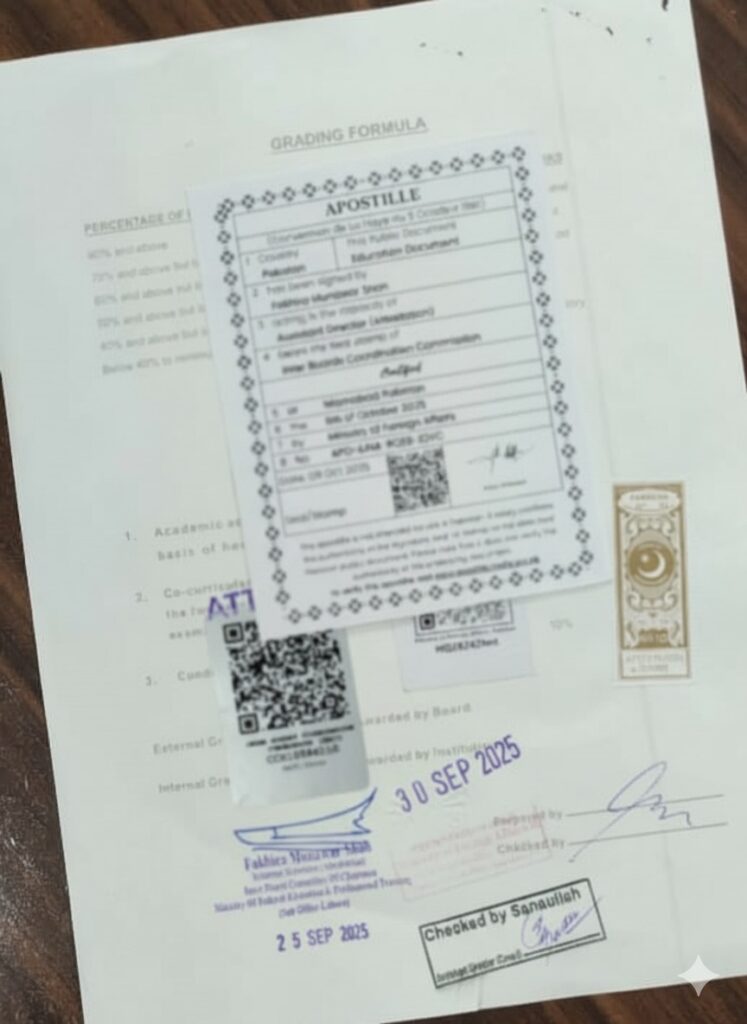
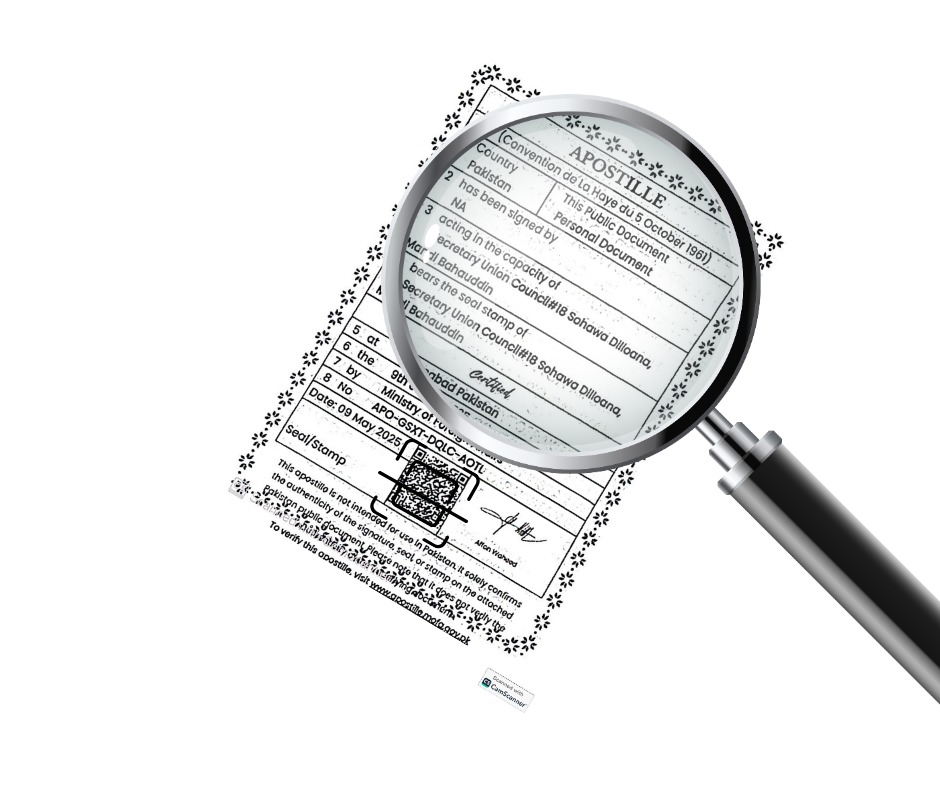
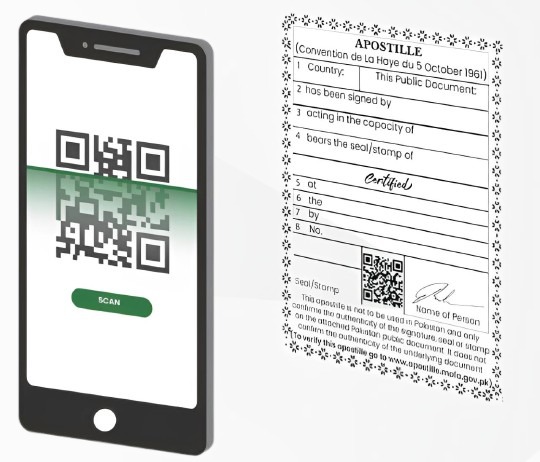
Where to Get Apostille in Pakistan?
Pakistan officially joined the Hague Apostille Convention in 2023. Now, the Ministry of Foreign Affairs (MOFA) is responsible for issuing Apostille stamps on documents.
Difference Between Apostille and MOFA Attestation
- MOFA Attestation – Required for non-Hague member states (like UAE, Saudi Arabia, Qatar).
- Apostille – Accepted only in Hague Convention countries, replacing embassy attestation.
Apostille for Students
Planning to study in Europe, the UK, or the USA? Apostille is now a mandatory requirement for your degrees and transcripts. Without it, universities won’t accept your papers.
Tips for Smooth Apostille Process
- Ensure all documents are pre-attested by local authorities.
- Carry multiple copies of documents.
- Use reliable attestation services for hassle-free processing.
Apostille for Employment Abroad
Employers in Hague countries require Apostille-stamped certificates to confirm your qualifications. It simplifies and speeds up work visa processing.
Apostille for Business and Trade
If your company is signing international contracts or assigning power of attorney in a Hague country, Apostille is compulsory for recognition.
Processing Time and Fees for Apostille
- Processing Time – Normally 2–3 working days.
- Fee – Nominal charges depending on document type (educational, personal, commercial).
Common Challenges in Apostille Attestation
- If the destination country is not part of the Hague Convention, Apostille won’t work.
- Missing pre-verification stamps cause rejection.
- Processing delays may occur due to high applications.